
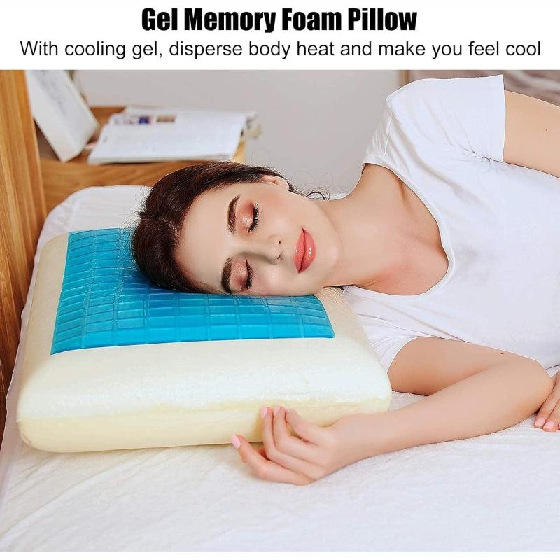
Do cooling pillows really work because they manage heat at the head and neck? That is the basic idea. A good cooling pillow can move heat away from your head, feel less warm against your skin, and make bedtime more comfortable. However, it cannot turn a hot bedroom into a cold one, and it cannot fix every cause of poor sleep.
The simple answer is yes, cooling pillows can work, but their effect depends on the material, room temperature, sleeping position, and how hot you get at night.
In this guide, we will look at the science, real research, benefits, drawbacks, buying tips, and real-life examples. We will also answer 20 common questions so you can decide whether a cooling pillow deserves a place on your bed.
Research address: National Library of Medicine, 8600 Rockville Pike, Bethesda, MD 20894, USA.
What a Cooling Pillow Actually Does
A cooling pillow mainly manages heat at the head and neck. Some covers feel cool when you first lie down. Others pull heat into a gel layer, use phase-change material, or allow more air to move through the fill.
Therefore, cooling does not always mean that the pillow stays cold. Instead, the goal is usually to reduce heat buildup and make the surface feel more comfortable.
Why Your Head Can Feel Hot at Night
Your body changes temperature as you prepare for sleep. Therefore, a warm room, thick blanket, foam that holds heat, or poor airflow can make the pillow feel hot.
Moreover, your head stays in contact with the pillow for hours. So, even a small amount of trapped heat can become annoying during the night.
Do Cooling Pillows Really Work for Everyone?
Do cooling pillows really work for everyone? No. People have different heat needs, sleep positions, rooms, and pillow preferences.
A hot sleeper may notice a clear benefit, while a person who rarely feels warm may notice little. Therefore, your personal sleep environment matters just as much as the pillow itself.
The Science Behind Heat Transfer
Do cooling pillows really work through simple heat movement, not through endless cold? Yes, that is the basic principle.
A pillow can conduct heat away from your skin, spread heat across a larger surface, or let warm air escape. It does not create endless cold.
This difference is important because many products use the word “cooling” for several different designs.
What Researchers Found About Head Cooling
A small laboratory study tested head cooling in a hot, humid setting. Researchers found that head and neck cooling improved thermal comfort, while head cooling alone produced smaller sleep benefits. The study included only nine healthy men, so it is useful but limited.
Therefore, this research supports the idea that cooling the head can change how comfortable you feel. However, it does not prove that every commercial cooling pillow will improve sleep.
What the Larger Bedding Review Says
A 2025 systematic review examined nine randomized studies of cooling bedding. It found that cooling bedding could lower body temperature, but the evidence was very low to low and did not show consistent improvements in major sleep measures.
This is one of the most useful findings for shoppers. Cooling can affect temperature, yet better temperature does not always mean better measured sleep.
Why the Research Is Not a Simple Yes
This matters because cooling pillows differ widely. One study may test a special laboratory pillow, while a store pillow may simply have a cool-feeling fabric.
Therefore, you should not treat every cooling claim as equal. Look at the actual material and design instead of trusting the word “cooling” alone.
Do Cooling Pillows Really Work in Hot Rooms?
Do cooling pillows really work in hot rooms? They can help with local comfort, especially when your head feels warmer than the rest of your body.
Still, room temperature remains important. A pillow has a small cooling area compared with your whole bedroom.
The Sleep Foundation notes that around 65–68°F (18–20°C) works well for many adults, although personal comfort varies.
Cooling Pillow Materials Explained
Memory foam can feel supportive but may trap heat. Gel-infused foam may spread heat. Latex can have an open-cell feel and strong airflow.
Meanwhile, fiber fills can breathe well, while phase-change covers can absorb heat during temperature changes.
So, the material can make a major difference.
Gel Cooling Is Not Always Ice-Cold
Gel often gives a cooler touch because it can absorb heat from your skin. Yet the gel eventually warms.
Therefore, a gel pillow may feel cool at first and less cool later in the night.
That does not necessarily mean the pillow failed. It means the material reached a warmer temperature after absorbing heat.
Phase-Change Material Has a Different Job
Phase-change material can absorb and release heat around a target temperature.
This approach aims for thermal balance rather than an icy feeling. Results depend on the amount of material, cover, room, and contact with your body.
Therefore, phase-change technology may feel different from gel or ventilated foam.
Breathability May Matter More Than a Cold Touch
A pillow that feels cool for ten minutes may not help for eight hours.
Therefore, airflow, moisture control, pillow shape, and fabric can matter more than a dramatic cold sensation.
In many cases, a breathable pillow that stays comfortable can be more useful than a pillow that feels extremely cold at bedtime.
Do Cooling Pillows Really Work for Side Sleepers?
Do cooling pillows really work for side sleepers? Yes, potentially.
Side sleepers often need more height to keep the neck level. A cooling pillow that feels great but bends too much can still lead to poor comfort.
Therefore, side sleepers should check both cooling performance and pillow height.
Cooling Choices for Back Sleepers
Back sleepers usually need moderate support. A pillow that is too tall can push the head forward.
So, choose cooling features only after checking whether the pillow keeps your neck in a comfortable, neutral position.
Cooling Choices for Stomach Sleepers
Stomach sleepers often prefer a thinner pillow.
A thick cooling pillow may feel comfortable at first but strain the neck. Therefore, low height and soft support can be more useful than advanced cooling technology.
Do Cooling Pillows Really Work With Memory Foam?
Do cooling pillows really work with memory foam? Sometimes.
A ventilated foam core, cooling cover, or gel layer can reduce heat buildup. However, dense foam can still hold heat, so material labels alone do not tell the whole story.
A pillow’s internal structure matters too.
How Cotton and Bamboo Covers Compare
Natural fibers can feel breathable and manage moisture well.
Bamboo-derived fabrics may feel smooth, but the word “bamboo” does not automatically mean the pillow stays cold.
Therefore, look at the entire construction rather than one fabric label.
Why Pillow Covers Change the Result
A thick waterproof protector can block airflow and reduce a cooling pillow’s surface feel.
Therefore, use a protector that allows the pillow’s cooling design to work.
A lightweight, breathable pillowcase can also help reduce the warm feeling caused by trapped moisture.
Do Cooling Pillows Really Work for Night Sweats?
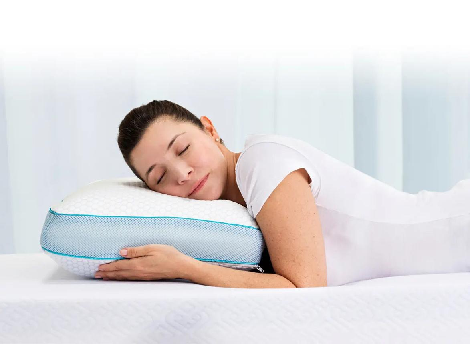
Do cooling pillows really work for night sweats? They may make your head feel less hot, but they do not treat the reason you sweat.
Persistent or unexplained night sweating can have many causes. Therefore, a pillow should not be treated as a medical solution.
Cooling Pillows and Hot Flashes
Cooling bedding may help thermal comfort during hot flashes.
A small 2022 pilot study of a cooling mattress system found fewer vasomotor symptoms and better sleep scores after eight weeks, but it was small and had no control group.
Therefore, the result is interesting but should not be treated as proof that every cooling pillow will produce the same effect.
A Real-Life Example From a Warm Bedroom
Imagine a sleeper in a warm apartment who wakes twice because the pillow feels damp and hot.
Replacing a heat-trapping pillow with a breathable model may reduce discomfort. However, opening airflow, using a fan, and lowering room temperature may produce a bigger change.
This example shows why you should think about the whole bedroom rather than one product.
Case Study: Controlled Head Cooling
In a controlled experiment at 32°C and 80% humidity, researchers compared ordinary sleep with cooling conditions.
Head and neck cooling improved thermal comfort and sleep measures more than no cooling. This suggests local cooling can matter when heat is the problem.
However, the study used a small group, so larger studies would give stronger evidence.
Case Study: A Heat-Wave Bedding Test
A 2025 randomized study tested a high-heat-conductivity mattress topper during 32°C nights.
Compared with a standard mattress, the cooling topper increased total sleep time by about 21 minutes and improved sleep efficiency.
This is mattress evidence, not proof for every pillow. Still, it shows that moving heat away from the body can matter during very warm sleeping conditions.
What These Cases Teach Us
The pattern is simple: cooling seems most useful when heat is actually disturbing sleep.
Therefore, a cooling pillow is more likely to help a hot sleeper than someone sleeping comfortably in a cool room.
This also explains why reviews can differ so much.
Do Cooling Pillows Really Work for Better Sleep Quality?
Do cooling pillows really work for better sleep quality? They may help indirectly.
If heat wakes you, reducing that discomfort can make it easier to stay asleep. But research does not prove that every cooling pillow improves sleep quality.
A 2025 review found no clear overall improvement in several major sleep measures across cooling bedding studies.
The Comfort Benefit Is Easy to Overlook
Even when a pillow does not change sleep-stage data, feeling comfortable matters.
A cooler, drier surface may make bedtime feel easier. However, comfort is personal, so one person’s perfect pillow can be another person’s poor match.
The Biggest Advantage for Hot Sleepers
Do cooling pillows really work best when you need targeted heat control? That is often their clearest benefit.
Instead of cooling the whole bed, a pillow focuses on an area that touches your head for hours.
Therefore, it can be a simple option for people who mainly notice heat around their head.
Another Advantage: Less Damp Feeling
Breathable covers and moisture-friendly fills can help reduce the sticky feeling caused by sweat.
This can make turning over less annoying. Also, a dry surface can simply feel cleaner and more comfortable.
Another Advantage: No Electricity Required
Many cooling pillows work without a plug.
That makes them simple to use and quiet. However, passive cooling products cannot keep removing heat forever.
Therefore, they are different from active temperature-controlled bedding.
The Main Disadvantage: Cooling Fades
A pillow may feel cool at first and warm later. That is normal.
Heat must go somewhere, and a passive pillow has a limit.
So, do not expect a non-electric pillow to remain refrigerator-cold throughout an entire night.
Another Disadvantage: Cooling Can Cost More
Advanced materials often raise the price.
Therefore, compare the actual construction instead of paying extra for a label that only says “cooling.”
A simple breathable pillow may sometimes solve the same problem for less money.
Another Disadvantage: Support May Suffer
Some very soft cooling pillows feel pleasant but fail to support the neck.
Sleep comfort needs both temperature control and good alignment. Therefore, cooling should never be the only feature you consider.
Do Cooling Pillows Really Work Without Air Conditioning?
Do cooling pillows really work without air conditioning? They can still provide local relief.
Yet if the entire room stays very hot, the pillow will absorb heat from the environment and your body faster.
In that situation, better room airflow may have a larger effect.
What Temperature Should Your Bedroom Be?
The Sleep Foundation says about 65 to 68°F, or roughly 18 to 20°C, works well for many adults. Individual comfort still varies.
Therefore, use the room temperature as a starting point, not a strict rule.
If you sleep comfortably at a slightly warmer or cooler temperature, there is no need to force yourself into one exact number.
A Simple Test Before Buying
Try improving your room first.
Use lighter bedding, increase airflow, and keep your pillowcase breathable.
If your head still feels hot, a cooling pillow becomes a more logical next step.
This approach can save money because you may discover that your bedroom setup is the real problem.
How to Test a Cooling Pillow at Home
Use the pillow for several nights rather than judging it after five minutes.
Notice whether you wake from heat, sweat less, or feel comfortable through the second half of the night.
Also, check whether your neck feels good when you wake.
Do Cooling Pillows Really Work All Night?
Do cooling pillows really work all night? Some can manage heat for long periods, but no passive material stays equally cool forever.
Look for airflow and heat-spreading design instead of promises of nonstop cold.
A pillow that remains comfortable can be more useful than one that simply feels cold when you first touch it.
How to Wash and Protect the Pillow
Follow the care label.
A washable cover is helpful because sweat and skin oils build up over time. However, never wash a foam core unless the manufacturer says it is safe.
Good care can also help the pillow keep its shape and feel.
How to Choose the Right Height
First, choose a height that fits your sleeping position.
Then compare cooling features.
A cold pillow that hurts your neck is not a good sleep solution. Support and comfort should come before marketing claims.
How to Choose by Material
Look for breathable construction, ventilated foam, responsive fiber, or a well-designed cooling cover.
Also check whether the product has clear care instructions and a return period.
If possible, look for independent testing rather than relying only on brand claims.
Expert Advice: Solve Heat at the Source
Sleep experts generally focus on the whole sleep environment.
A cooling pillow can help, but room temperature, bedding, clothing, airflow, and mattress heat all work together.
Research also shows that whole-bed temperature control can influence thermal comfort and, in some studies, sleep outcomes.
Expert Advice: Do Not Chase an Icy Pillow
Do cooling pillows really work best when they create comfortable temperature rather than extreme cold? Yes.
The goal is comfortable temperature, not extreme cold.
A pillow that feels freezing can become uncomfortable and may encourage you to keep changing positions.
Do Cooling Pillows Really Work for People Who Sweat?
Do cooling pillows really work for people who sweat? They may reduce the hot feeling around the head, especially when the cover breathes well.
However, heavy sweating can overwhelm a passive pillow.
Therefore, combine the pillow with breathable sheets, light sleepwear, and a comfortable room.
What to Look for Before Spending Money
Check the return policy, washable cover, pillow height, fill type, cooling method, warranty, and real user feedback.
Also look for independent testing when a brand makes strong temperature claims.
Most importantly, do not buy based on the word “cooling” alone.
The Final Buying Rule
Choose support first, cooling second, and marketing last.
If a pillow keeps your neck comfortable and reduces heat, it has a better chance of being useful.
In other words, the best cooling pillow is not necessarily the coldest pillow. It is the one that matches your body and sleep environment.
Frequently Asked Questions
FAQ 1: Do Cooling Pillows Really Work or Are They a Gimmick?
They can work, but the effect varies. Most cooling pillows manage heat rather than create cold. The best results usually come when heat is the main reason you feel uncomfortable.
FAQ 2: How Long Does a Cooling Pillow Stay Cool?
It depends on the material and room. Passive pillows usually become warmer as they absorb heat. Breathable designs may keep feeling comfortable longer even when they are no longer cool to the touch.
FAQ 3: Are Cooling Pillows Good for Hot Sleepers?
Yes. Hot sleepers may notice the biggest comfort benefit because they have a clear heat problem. Still, a cool bedroom and light bedding can make an even bigger difference.
FAQ 4: Do Cooling Pillows Help With Sweating?
They can help manage heat and moisture around your head. However, they do not stop sweating caused by illness, medicine, hormones, or a very hot room.
FAQ 5: Is Gel Better Than Memory Foam?
Not always. Gel can spread heat, while memory foam can provide strong pressure relief. A well-ventilated foam pillow may outperform a poorly designed gel pillow.
FAQ 6: Can a Cooling Pillow Improve Sleep?
It may improve comfort and reduce heat-related wake-ups. However, research on cooling bedding does not show that every product improves objective sleep measures.
FAQ 7: Do Cooling Pillows Really Work in Summer?
They can be useful in summer because warm rooms increase heat buildup. However, combine the pillow with lighter bedding, airflow, and a comfortable room temperature.
FAQ 8: Are Cooling Pillows Safe?
Most ordinary cooling pillows are safe when used according to the manufacturer’s instructions. Check care instructions, especially for gel layers, electrical parts, or special cooling materials.
FAQ 9: Can Cooling Pillows Help During Hot Flashes?
They may improve local comfort. Yet they do not treat hot flashes themselves. If hot flashes are frequent or severe, speak with a health professional about possible causes and treatment.
FAQ 10: Should Side Sleepers Use Cooling Pillows?
Yes, if the pillow provides enough height and neck support. Cooling should not come at the cost of alignment.
FAQ 11: Should Stomach Sleepers Use a Cooling Pillow?
They can, but a thinner pillow often works better. Too much height can place the neck in an awkward position.
FAQ 12: Do Cooling Pillows Really Work Without Refrigeration?
Yes, many use passive materials that absorb or move heat. However, they eventually approach the surrounding temperature and your body temperature.
FAQ 13: Why Does My Cooling Pillow Get Hot?
It absorbs heat from your head and neck. If the room is warm or the pillow has poor airflow, heat can build up faster.
FAQ 14: Can a Pillowcase Ruin Cooling Performance?
Yes. A thick, heat-trapping cover can reduce airflow and change the surface feel. Choose a breathable cover that fits the pillow’s design.
FAQ 15: How Often Should I Replace a Cooling Pillow?
There is no single schedule. Replace it when the shape breaks down, support becomes poor, the material becomes damaged, or cleaning no longer keeps it fresh.
FAQ 16: Are Expensive Cooling Pillows Worth It?
Not automatically. Price does not prove better cooling. Compare materials, construction, support, warranty, return policy, and independent evidence.
FAQ 17: Do Cooling Pillows Really Work Better Than Regular Pillows?
They may work better for people who sleep hot. For a cool sleeper, a regular breathable pillow may provide the same comfort at a lower price.
FAQ 18: Can I Make a Regular Pillow Cooler?
Yes. Use a breathable pillowcase, lighter bedding, good airflow, and a cooler room. You can also place the pillow away from direct heat sources.
FAQ 19: What Is the Best Cooling Pillow Material?
There is no universal winner. Look for a design that balances airflow, heat transfer, moisture control, and neck support for your sleep position.
FAQ 20: What Is the Biggest Mistake When Buying a Cooling Pillow?
Choosing cooling technology before checking support. A pillow should keep your neck comfortable first. Then its cooling features should solve your heat problem.
Conclusion
Do cooling pillows really work as a miracle product? No, and that is an important point.
However, they can be useful.
Research supports the idea that local and whole-bed cooling can change thermal comfort and body temperature, but the evidence for better sleep is mixed. A 2025 systematic review found low or very low certainty for many sleep outcomes, so strong claims deserve caution.
At the same time, controlled studies show that cooling can improve comfort in hot conditions, and some forms of temperature-controlled bedding have improved certain sleep measures.
Therefore, the smartest approach is simple:
- Keep your bedroom comfortable.
- Use light, breathable bedding.
- Choose the correct pillow height for your sleeping position.
- Look for airflow and heat management.
- Do not trust the word “cooling” alone.
- Test the pillow for several nights.
- Use the return policy if the pillow does not work for you.
A cooling pillow is not a miracle product. Instead, it is one small tool in a larger sleep setup. When you match the pillow to your body, sleep position, and room, it can be a useful upgrade.
Recommended research sources
- PubMed: 2025 systematic review of cooling bedding and sleep
- Sleep Foundation: Best Temperature for Sleep
- PubMed: Effects of head cooling on human sleep
- PubMed: Local body cooling and sleep quality in hot environments
- PubMed: 2025 high-heat-conductivity bedding study